

Every year, it happens like clockwork. January explodes with optimism. Gym parking lots overflow. Fitness apps download by the thousands. New shoes hit the treadmill belts with unshakable promise. And then—February arrives quietly, without fanfare, and takes most of those resolutions with it.
People blame willpower. They blame busy schedules. They blame exhaustion, stress, or lack of time. But those things existed in January too—and somehow didn’t stop anyone then.
So why does motivation collapse in February?
Because motivation was never the real fuel. Friction was the real enemy.
Most people don’t quit fitness. They quit inconvenient systems.
That’s why at-home training replaces gym crowds for people who stop losing to February. It’s not because they’re stronger mentally. It’s because they’ve engineered better conditions. They’ve built an environment that supports consistency instead of sabotaging it.
If you’ve ever wondered why the “February quitter” version of you gives up—and what the smarter version of you could do instead—this article explains why equipment quality matters more than hype, habit, or human grit. And why choosing the best home gym to stay consistent matters more than choosing another “90-day challenge.”
The Resolution Mindset Is a Setup for Failure
January resolution mindset is emotional fuel. It’s based on mood, symbolism, and momentum.
But emotions are not systems.
Motivation spikes on January 1st because everything feels fresh. A new calendar. Clean goals. Renewed hope. But that energy doesn’t vanish randomly—it vanishes when it collides with resistance from the real world.
Crowded gyms.
Long waits.
Cold mornings.
Busy nights.
Commute times.
Full parking lots.
Broken equipment.
Social pressure.
Friction drains motivation like a slow leak drains a tire.
People don’t wake up in February suddenly disliking fitness. They wake up tired of fighting against everything that makes it hard.
When at-home training replaces gym crowds, it’s not because people suddenly care more. It’s because they’re finally training in an environment that doesn’t fight back.
Why Willpower Always Loses to Friction
If motivation solved problems, nobody would own a treadmill-shaped clothes rack.
Willpower is emotional effort. It’s the energy required to override discomfort.
But humans are not built to win wars of will every morning. We’re built to conserve energy. Systems that rely on emotional push eventually break—systems that reduce obstacles endure.
Every layer of friction between you and training compounds over time:
The commute.
The waiting.
The weather.
The schedule.
The availability.
The mental load.
Even one small obstacle repeated daily can derail an entire habit.
Now imagine removing:
Traffic.
Queues.
Closing hours.
Social pressure.
Noise.
Commute fatigue.
Suddenly, training doesn’t feel like an event.
It feels like brushing your teeth.
At-home training replaces gym crowds not through hype—but through friction elimination.
And the fastest way to lower friction?
Better equipment.
Equipment Quality Drives Consistency (Not Grit)
Let’s be honest: motivation is easy when the environment is fun. It’s when the experience feels frustrating that discipline gets tested.
Cheap, limited, clunky equipment creates mental resistance. When your gear limits your workouts, slows you down, or feels awkward, you subconsciously avoid using it. No one builds habits with tools they secretly resent.
The best home gym to stay consistent doesn’t just perform well—it gets out of your way.
Quality equipment:
Moves smoothly
Adjusts quickly
Handles progression
Minimizes setup time
Supports new challenges
Feels good under load
When the experience improves, usage increases. When usage increases, results follow.
Most people don’t quit because they’re lazy.
They quit because training becomes inconvenient, boring, or unrewarding.
Good equipment fixes all three.
Reduced Friction vs Commercial Gyms: The Real Advantage
Commercial gyms promise convenience—but deliver chaos in January and disappointment in February.
You don’t just battle weights in a gym.
You battle:
Schedules
Other people
Parking
Locker rooms
Waiting lists
Broken machines
Every workout becomes a negotiation.
At home, there is no negotiation.
Only execution.
When at-home training replaces gym crowds, the shift isn’t just logistical—it’s psychological. You stop asking permission to train. You stop clock-watching. You stop wondering if a machine will be free.
Your home gym becomes a non-negotiable space.
That psychological certainty alone increases consistency dramatically.
Built-In Motivation Through Variety
Monotony kills more habits than laziness ever could.
People don’t quit fitness because it’s “hard.”
They quit because it becomes boring.
Novelty is emotional oxygen.
When equipment allows you to:
Change angles
Switch grips
Alter resistance
Rotate exercises
Progress difficulty
Add new challenges
…you don’t get stale.
This is why serious home gyms outperform piecemeal setups. They offer variety within one ecosystem. That keeps workouts fresh without sabotaging structure.
Motivation loves momentum, but variety keeps momentum alive.
The best home gym to stay consistent is the one that makes you curious to return—not guilty when you don’t.
Beginner Wins Create Momentum
February failure usually comes after one silent moment:
“When am I supposed to see results?”
Beginners quit when effort doesn’t feel rewarded.
Visible progress fuels emotion.
Emotion fuels habit.
When a beginner uses quality equipment:
They learn faster
Feel stronger sooner
Improve form quicker
Trust the process earlier
Machines guide movement.
They reduce fear.
They increase confidence.
When a new user feels competent quickly, the habit solidifies.
Bad equipment creates confusion.
Good equipment creates wins.
And wins create identity.
People don’t quit things they identify with.
Why the G9 Eliminates February Failure
The most common mistake people make when building a home gym isn’t spending too much.
It’s spending wrong.
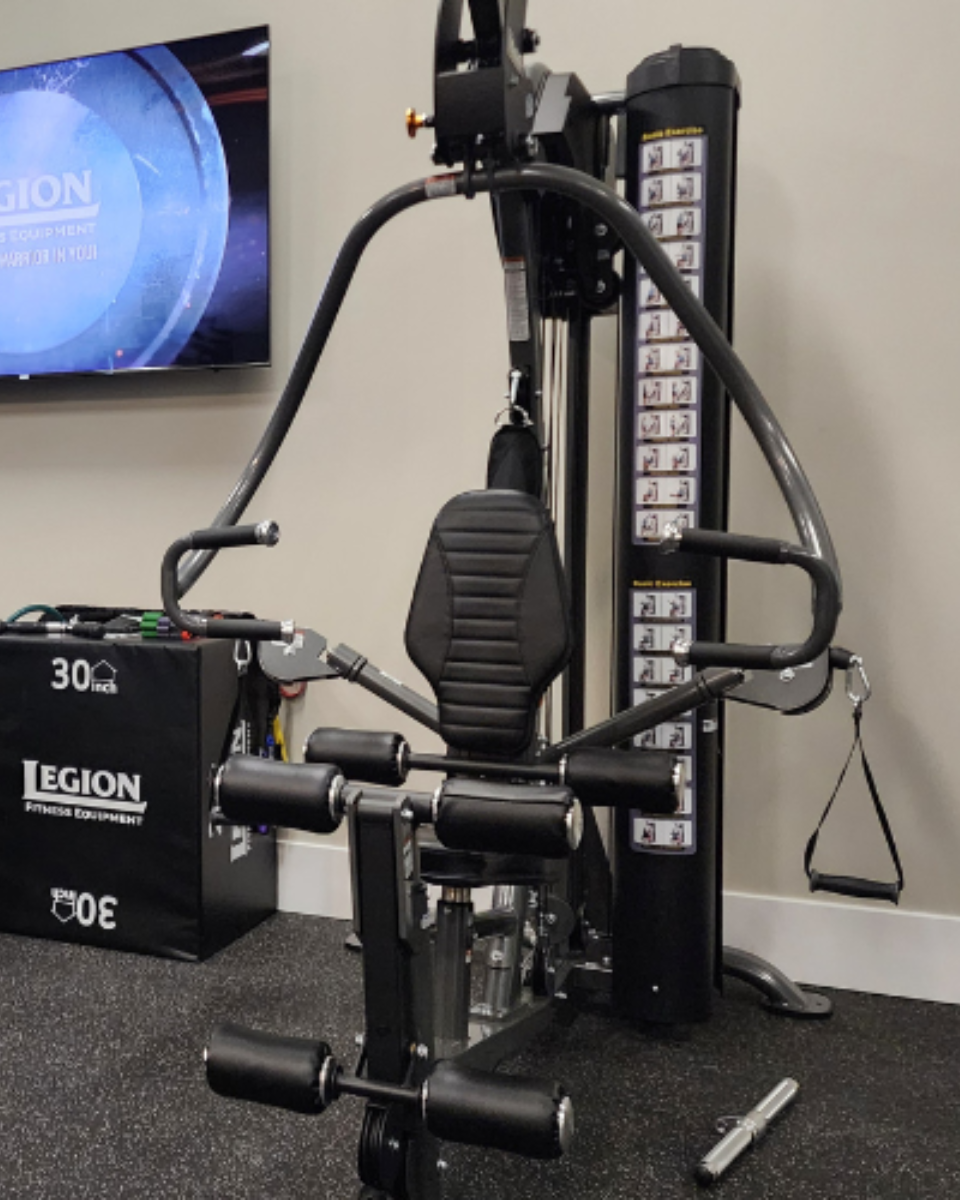
The Legion G9 exists because most home gyms were never engineered for real people with real schedules. They were built as flashy promises—not functional frameworks.
G9’s design philosophy assumes:
You will train tired.
You will train busy.
You will train distracted.
You will train stressed.
So instead of asking you to rise to the equipment…
The equipment rises to you.
It adjusts dynamically.
It scales with strength.
It expands with ambition.
It reduces setup friction.
It multiplies training options.
It turns effort into something enjoyable rather than exhausting.
When users stick with training on the G9, it’s not because they’re more disciplined.
It’s because training finally fits their life.
That is what makes it one of the best home gym systems to stay consistent.
Not because it motivates.
Because it removes reasons not to train.
Motivation Isn’t the Problem—The System Is
Here’s an uncomfortable truth:
If your fitness plan requires heroic effort every day—
It’s already broken.
The resolution mindset shouldn’t be about digging deeper.
It should be about building smarter.
Systems don’t rely on emotion.
They manage it.
With better equipment:
You don’t fight decision fatigue.
You don’t fight crowds.
You don’t fight time.
You don’t fight location.
You just train.
February doesn’t defeat people.
Systems do.
Good systems survive bad days.
Bad systems demand perfect ones.
The Myth of “Trying Harder”
February is where people decide they’re “bad at consistency.”
They’re not.
They’re bad at design.
Trying harder only works until you’re tired.
Design works when you are exhausted.
The best home gym to stay consistent isn’t for your best days.
It’s for your worst ones.
It’s for:
Late nights
Early mornings
Stressful weeks
Low energy days
Good equipment reduces the cost of showing up.
And when showing up becomes easy—
Consistency becomes inevitable.
The Shift From Phase to System
Fitness doesn’t fail because people lose desire.
It fails because people never build infrastructure.
January is emotion.
February is exposure.
When the illusion fades, the system reveals itself.
The winners aren’t different.
Their environment is.
When you design a system that:
Eliminates friction
Encourages variety
Rewards progress
Feels intuitive
Provides structure
You don’t rely on motivation.
You replace it.
That’s what separates short-term resolution-makers from long-term results-builders.
February Doesn’t Break Discipline—It Exposes Design
You were never weak.
Your setup was.
If your gym feels like a battle instead of a base—
If your equipment slows you down instead of lifting you up—
If your routine feels fragile instead of automatic—
…then no amount of motivation will save it.
Better systems beat stronger feelings.
Every time.
At-home training replaces gym crowds because it transforms fitness from a struggle into a structure.
And the best home gym to stay consistent isn’t about flash.
It’s about function.
It’s about building once—and benefiting forever.
February isn’t too hard.
Your system was too weak.
Fix the structure.
The habit will follow.
Share:
Resolution Proof: What to Look for When Buying a Serious Home Gym in 2026
Train Together, Stay Consistent: Couples Workouts That Actually Work (with the G9)