Most people don’t realize their home gym is holding them back until progress slows down.
At first, everything feels great. You’re motivated, you’re consistent, and even basic equipment delivers results. But over time, something shifts. Weights that once felt challenging become easy. Workouts stop feeling productive. Progress stalls, even though effort stays the same.
That’s usually the moment people start questioning themselves instead of their setup.
But here’s the truth: sometimes it’s not your discipline that’s the problem — it’s your system.
If you’re entering a pre-summer ramp-up phase and your training intensity is increasing but your results aren’t following, it might be time to ask an important question:
Is your gym helping you grow, or quietly limiting you?
This guide breaks down the most common signs you need a new home gym, and why upgrading your system isn’t about replacing what you have — it’s about evolving into something that matches your current level of training.
When Progress Stops Feeling Like Progress
One of the clearest early warning signs is stagnation.
You’re still training consistently. You’re still showing up. But your numbers don’t move anymore. Reps feel repetitive instead of progressive. Workouts feel familiar instead of challenging.
This is where many people misinterpret the problem. They assume they’ve “hit a plateau,” when in reality, they’ve simply outgrown their equipment.
Progressive overload — the foundation of all strength and muscle development — requires scalable resistance. If your setup doesn’t allow gradual increases in load, tempo variation, or movement complexity, your progress eventually flattens.
This is one of the most common signs you need a new home gym: when effort increases but adaptation doesn’t follow.
A proper system should evolve with you, not cap you.
Outgrowing Resistance: The First Major Red Flag
At the beginning of any fitness journey, almost any resistance feels effective. Your body is adapting quickly, and even light loads create change.
But as you become stronger, your system must scale.
If your equipment maxes out too early — or lacks fine resistance adjustments — you reach a point where training intensity can no longer increase meaningfully.
This is especially important during a pre-summer ramp-up phase, when people naturally push harder, train more frequently, and aim for visible results.
If your equipment cannot match your increased output, you’re not just plateauing — you’re being limited.
This is one of the most overlooked signs you need a new home gym, and one of the biggest reasons people feel “stuck” despite working hard.
Lack of Progression Paths: The Hidden Ceiling
Progression isn’t just about adding weight.
It’s about having structured pathways to increase difficulty over time:
- More resistance
- Different angles
- Increased volume
- Tempo manipulation
- Movement complexity
Many basic home gym setups lack this depth. They offer movement options, but not progression systems.
Without progression paths, workouts become maintenance instead of development.
You might stay fit — but you won’t keep building.
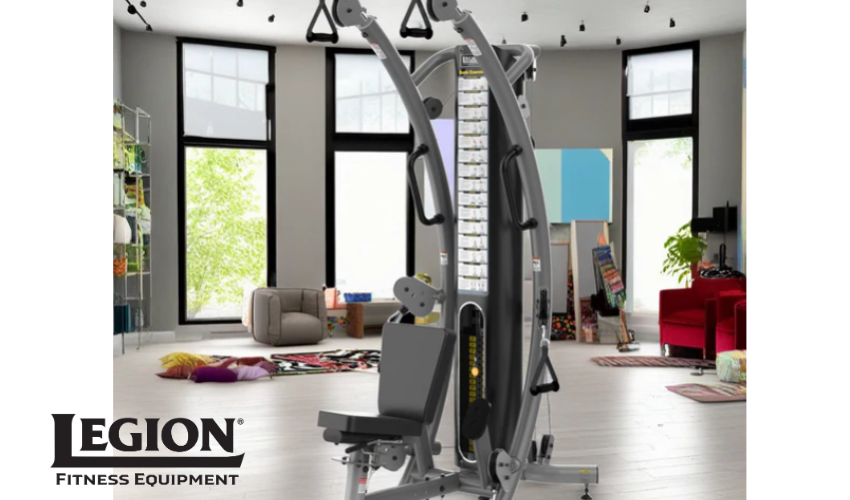
This is where advanced systems like the Legion G7 and G9 fundamentally change the equation. They don’t just provide exercises — they provide progression frameworks.
When progression disappears, motivation usually follows shortly after.
Space Inefficiency: When Your Gym Stops Working With You
Another major issue that signals it’s time to upgrade is space inefficiency.
As training intensity increases, cluttered or fragmented setups become more frustrating. You spend more time adjusting equipment than actually training. Transitions slow down. Workouts lose flow.
Momentum is fragile. Anything that interrupts it reduces training quality.
A good home gym should support flow — not interrupt it.
If your space feels chaotic, crowded, or constantly rearranged, that’s a sign your setup is no longer aligned with your training level.
One of the strongest signs you need a new home gym is when your environment feels like a barrier instead of a support system.
Modern integrated systems solve this by consolidating multiple training functions into one efficient footprint.
Safety Issues: The Silent Progress Killer
Safety is one of the most ignored aspects of home training — until something goes wrong.
As intensity increases, so does the importance of stability, controlled resistance, and predictable movement paths.
If your setup requires awkward positioning, unstable loading, or improvised mechanics, you’re not just limiting progress — you’re increasing risk.
Injury doesn’t just stop training temporarily. It resets momentum completely.
During pre-summer ramp-up phases, when training intensity naturally increases, unsafe setups become even more problematic.
A proper system should reduce risk while allowing intensity to rise safely.
If you’re constantly modifying movements to “make things work,” that’s one of the clearest signs you need a new home gym.
When you’re Training No Longer Feels Challenging
This one is subtle but important.
If your workouts feel easy even when you’re trying hard, something is off.
Challenge is essential for adaptation. Without it, the body has no reason to grow stronger, leaner, or more efficient.
Sometimes this happens because you’ve become more capable — which is great. But sometimes it happens because your equipment isn’t scaling with your ability.
If your training intensity feels capped, your system is likely the limiting factor.
Progress requires resistance that grows with you, not resistance that stays the same.
Momentum Loss: When Consistency Starts Slipping
Momentum is one of the most powerful forces in fitness. When it’s strong, training feels automatic. When it weakens, everything feels harder.
If you find yourself skipping workouts more often — not due to motivation, but due to friction — your environment may be the issue.
Long setups, inefficient transitions, or limited training variety can quietly erode consistency over time.
This is especially common during seasonal shifts like pre-summer ramp-up periods, when people try to increase training intensity but their setup slows them down instead of supporting them.
Momentum should feel like it builds. If it feels like it’s fading, your system may be due for an upgrade.
Why Upgrading isn’t Failure — it’s Evolution
One of the biggest mental barriers people face is the idea that upgrading equipment means something went wrong.
In reality, it usually means something went right.
You got stronger. You got more consistent. You got more serious.
Now your system needs to match your level.
Upgrading to advanced systems like the G7 or G9 isn’t about replacing your fitness journey — it’s about continuing it without limits.
Think of it as evolution, not correction.
Your goals changed. Your system should too.
G7 and G9: Built for Progression, Not Plateaus
The Legion G7 and Legion G9 are designed to eliminate the exact problems that cause stagnation:
- Scalable resistance for continued overload
- Integrated movement systems for progression
- Efficient design to preserve training momentum
- Stable mechanics for safe intensity increases
Instead of forcing you to adapt to the equipment, these systems adapt to you.
That’s the difference between a basic setup and a long-term training environment.
Pre-Summer Ramp-Up: The Perfect Time to Upgrade
Timing matters.
Right before summer is when people naturally increase training intensity. Goals become more defined. Consistency improves. Effort rises.
But this is also when limitations become most obvious.
If your current setup can’t support your increased output, you’ll feel it immediately during this phase.
That’s why the pre-summer ramp-up is one of the best times to evaluate whether your system is still serving you or holding you back.
The Checklist: Signs You Need a New Home Gym
If you’re unsure where you stand, here’s a clear summary of the most important signs you need a new home gym:
- You’ve outgrown your current resistance levels
- Your workouts lack progression structure
- Your space feels inefficient or cluttered
- You experience stability or safety concerns
- Training no longer feels challenging
- Your momentum is slipping despite consistency
- You’re increasing effort but not seeing results
If more than one of these feels familiar, the issue likely isn’t discipline — it’s system design.
Your Gym Should Match Your Ambition
Your home gym is not just equipment. It’s an environment that shapes your consistency, your intensity, and your results.
When that environment no longer matches your capability, progress slows — even when effort increases.
Upgrading isn’t about starting over. It’s about removing limits.
As you move through a pre-summer ramp-up phase and begin increasing training intensity, your system should support that growth — not restrict it.
Because the goal isn’t just to train harder.
It’s to train without barriers.
And when your setup finally matches your ambition, momentum stops fading — and starts compounding.
Share:
How to Program Your G9 for Mass, Strength, and Conditioning in One Setup
How to Design a Premium Apartment Fitness Center Without Wasting Space